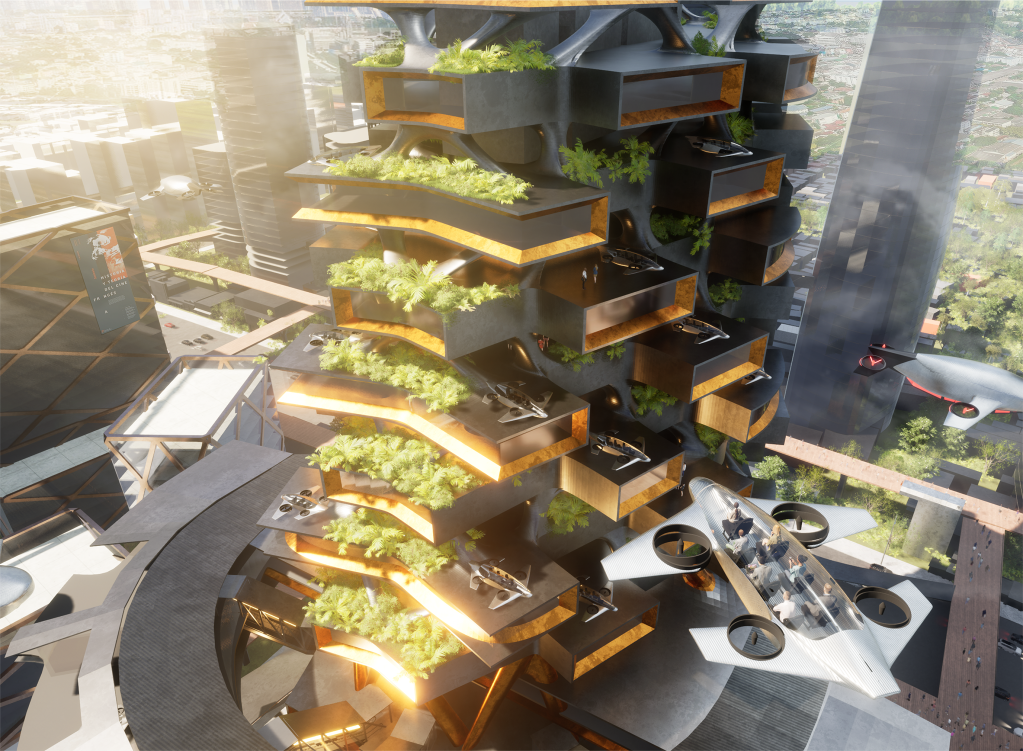
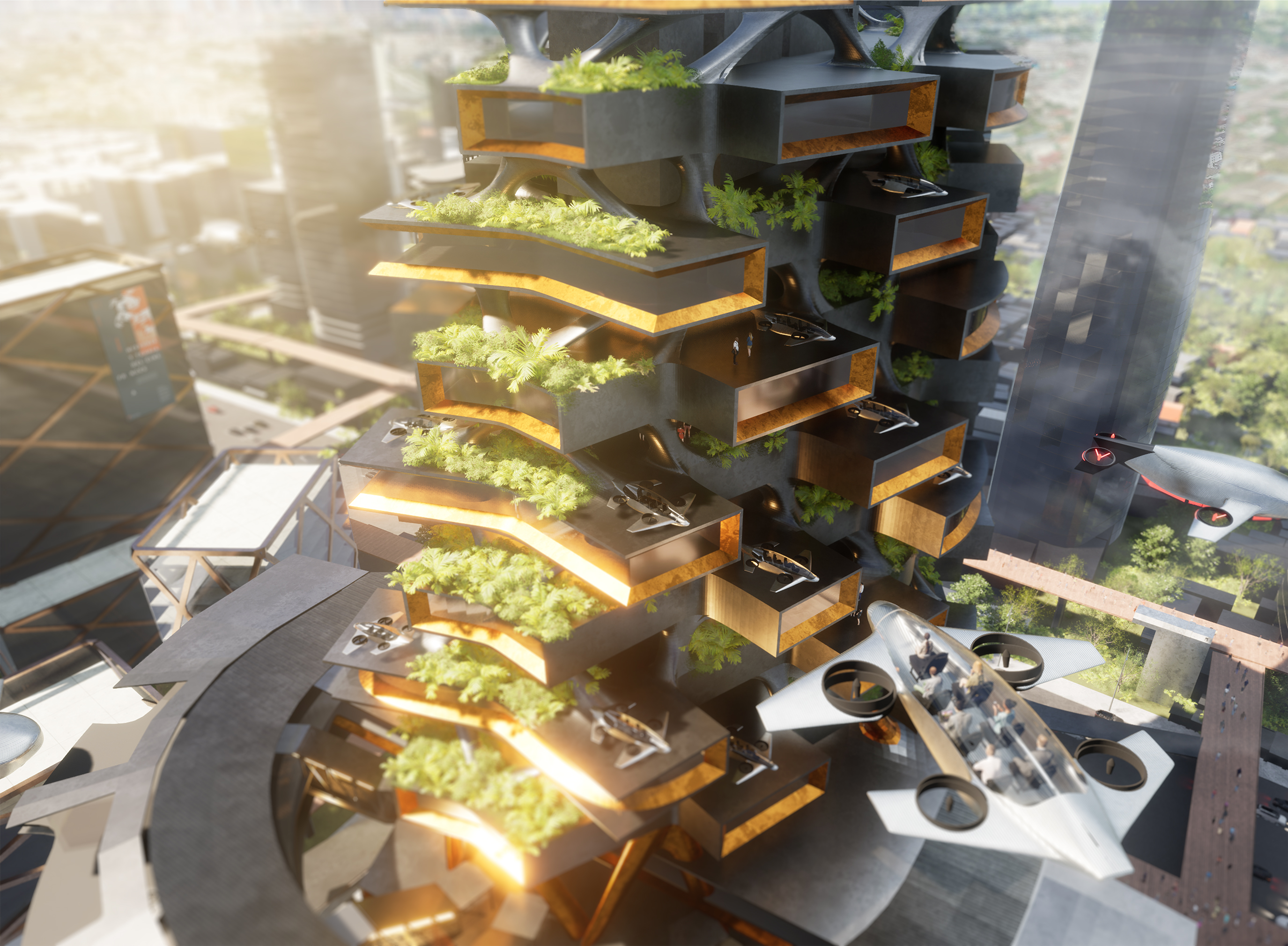
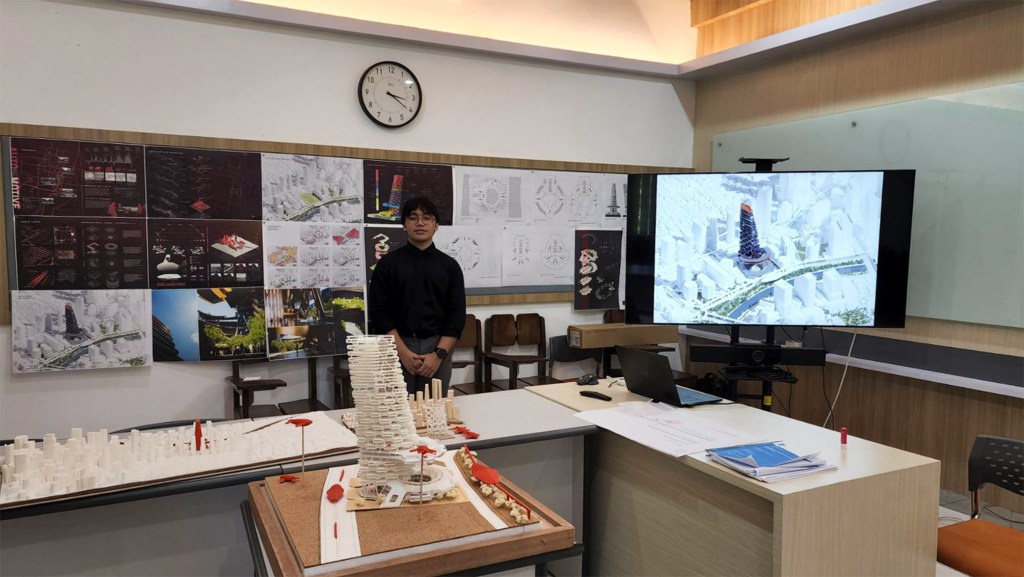
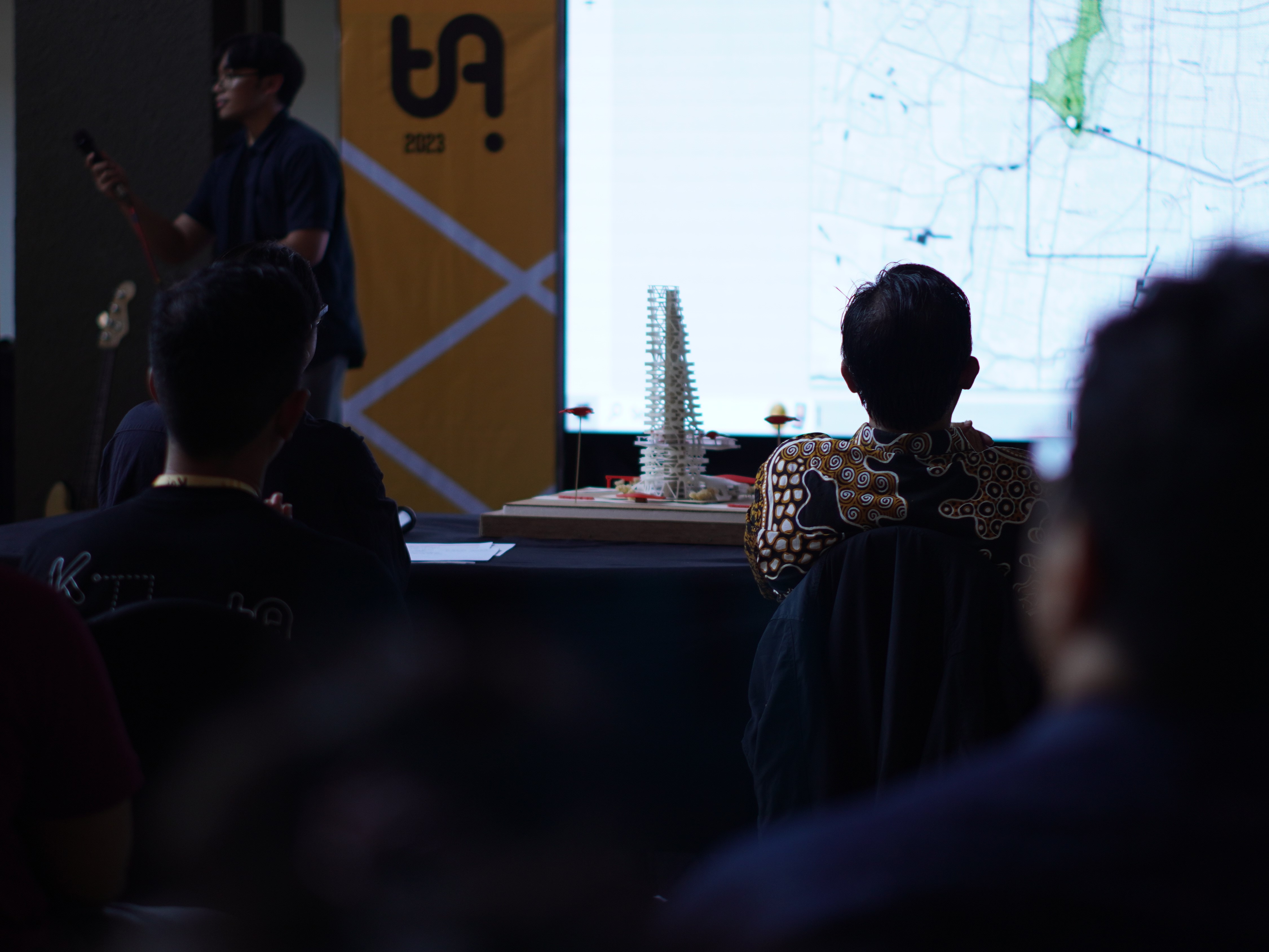
Keputran Hub is my thesis project, exploring the relationship between architecture and transportation. Set in a speculative vision of Surabaya in 2080, the design is rooted in the idea that cities continuously evolve, with transportation being one of the key driving factors. This project envisions how mobility can shape urban spaces, influencing both form and function in a future-oriented architectural approach in the advent of new air mobility.
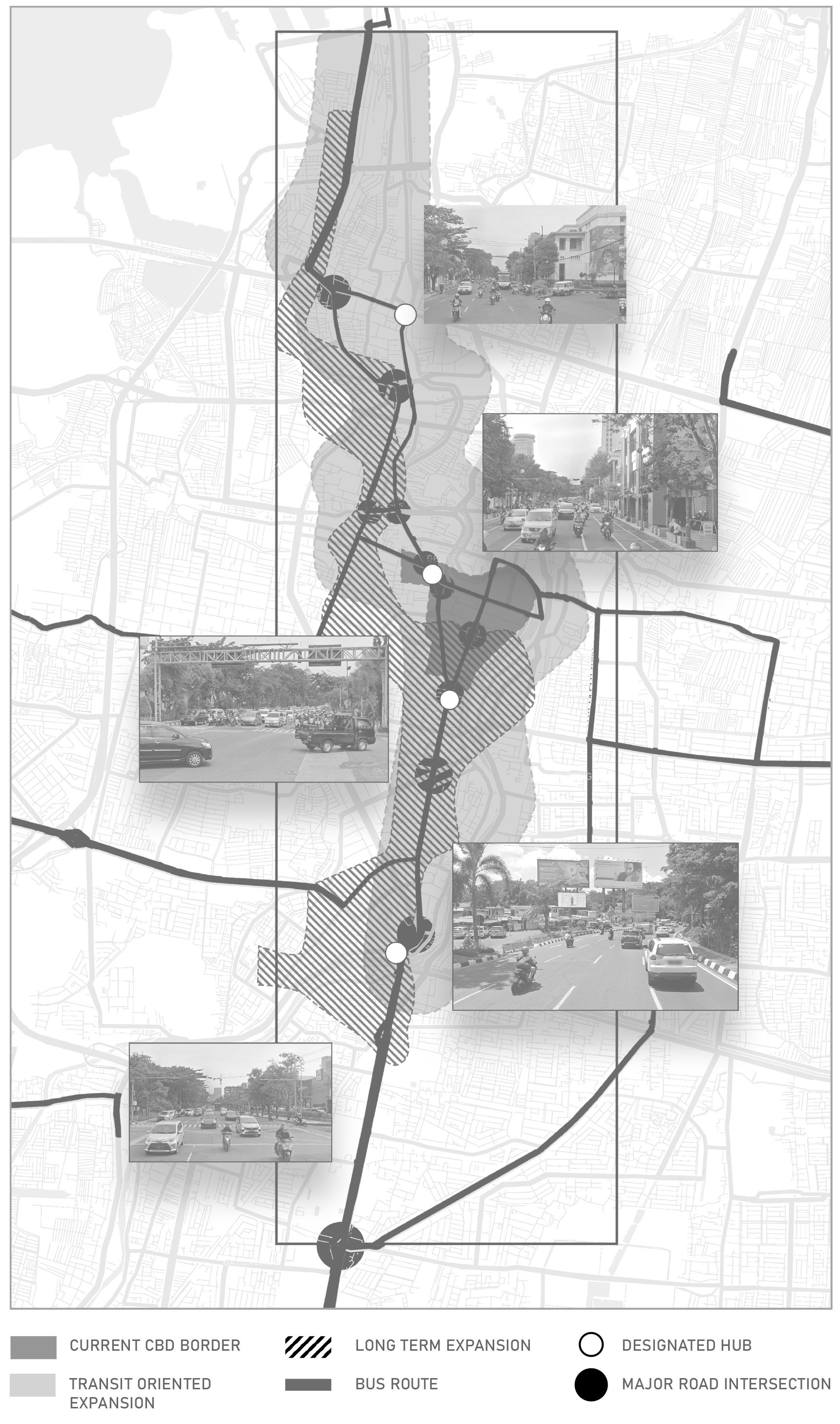
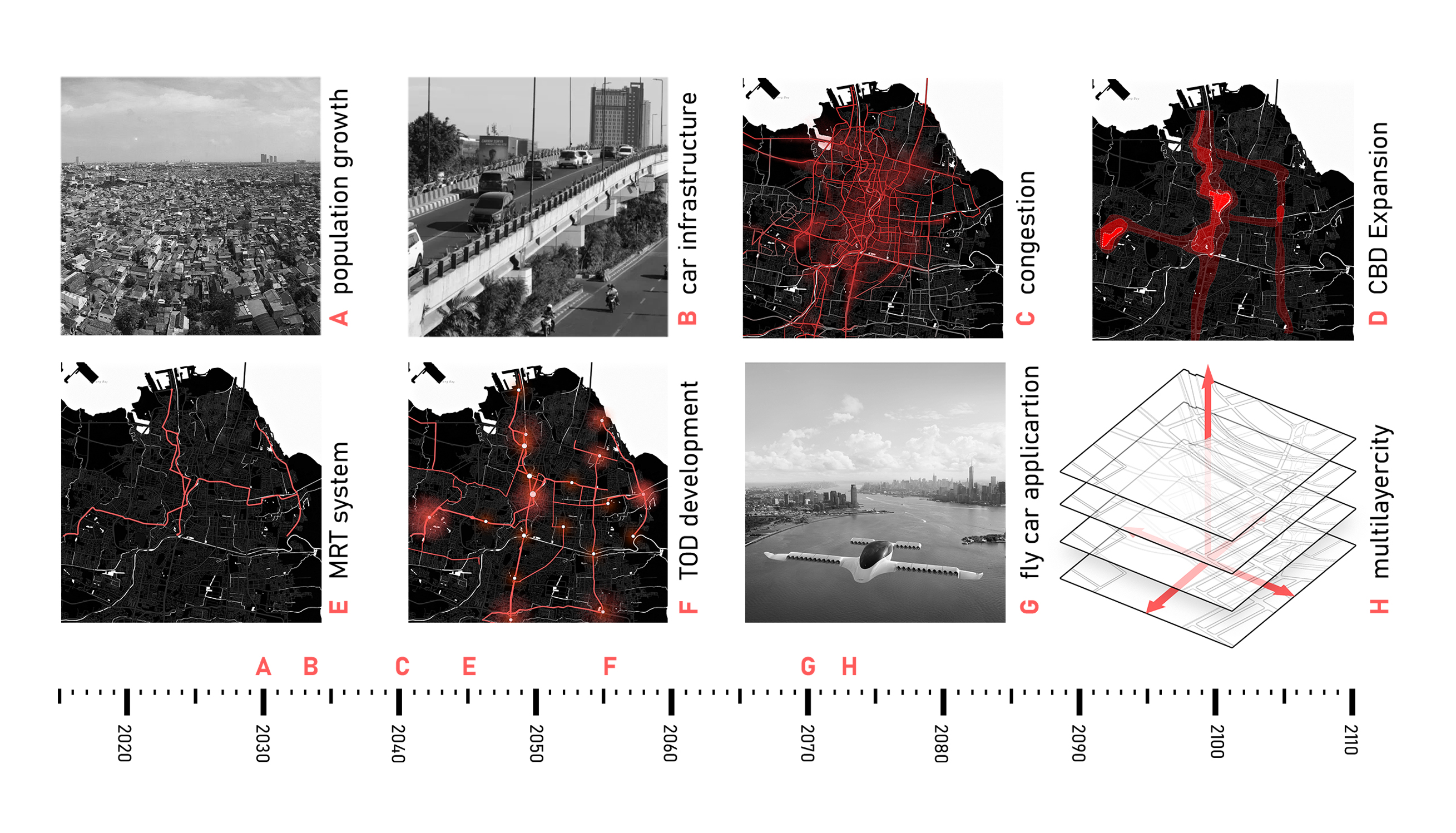
The physical landscape of Surabaya reflects a highly car-oriented development, with cars and motorcycles being the most widely used modes of transportation. The city is structured around major roads, some of which span up to seven lanes, emphasizing its reliance on private vehicles and shaping its urban fabric accordingly.
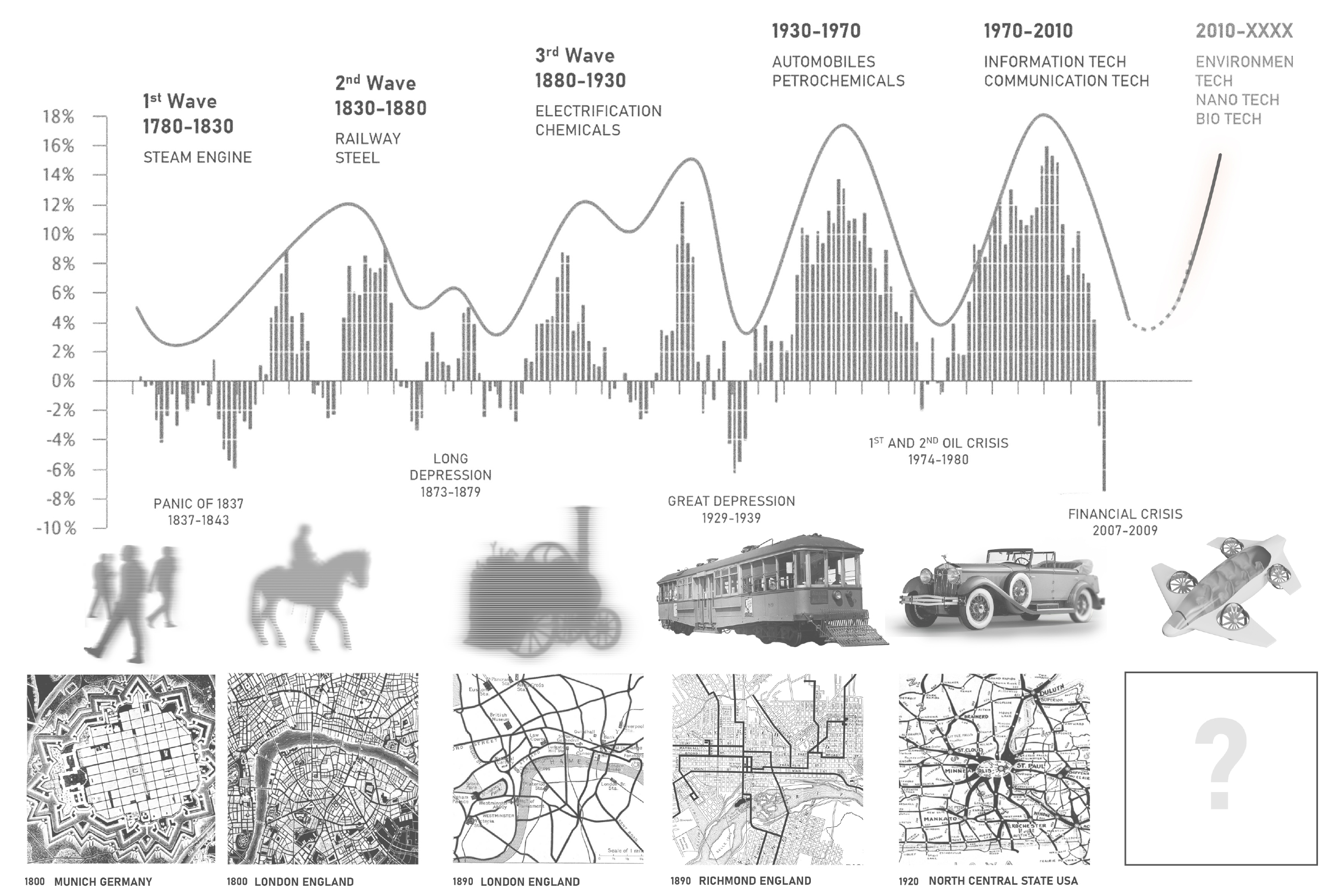
Historically, the shape of cities worldwide can be analyzed in parallel with transportation developments. When walking was the primary mode of movement, cities were highly dense, with all functions tightly packed together. The same applied during the era of horses and carriages, though streets began to widen to accommodate them. The advent of machines and locomotives connected distant cities, leading to urban growth concentrated around train stations, where goods and trade flourished. However, with the rise of automobiles—facilitating individual freedom of movement—cities became significantly more dispersed, shaping modern urban sprawl.
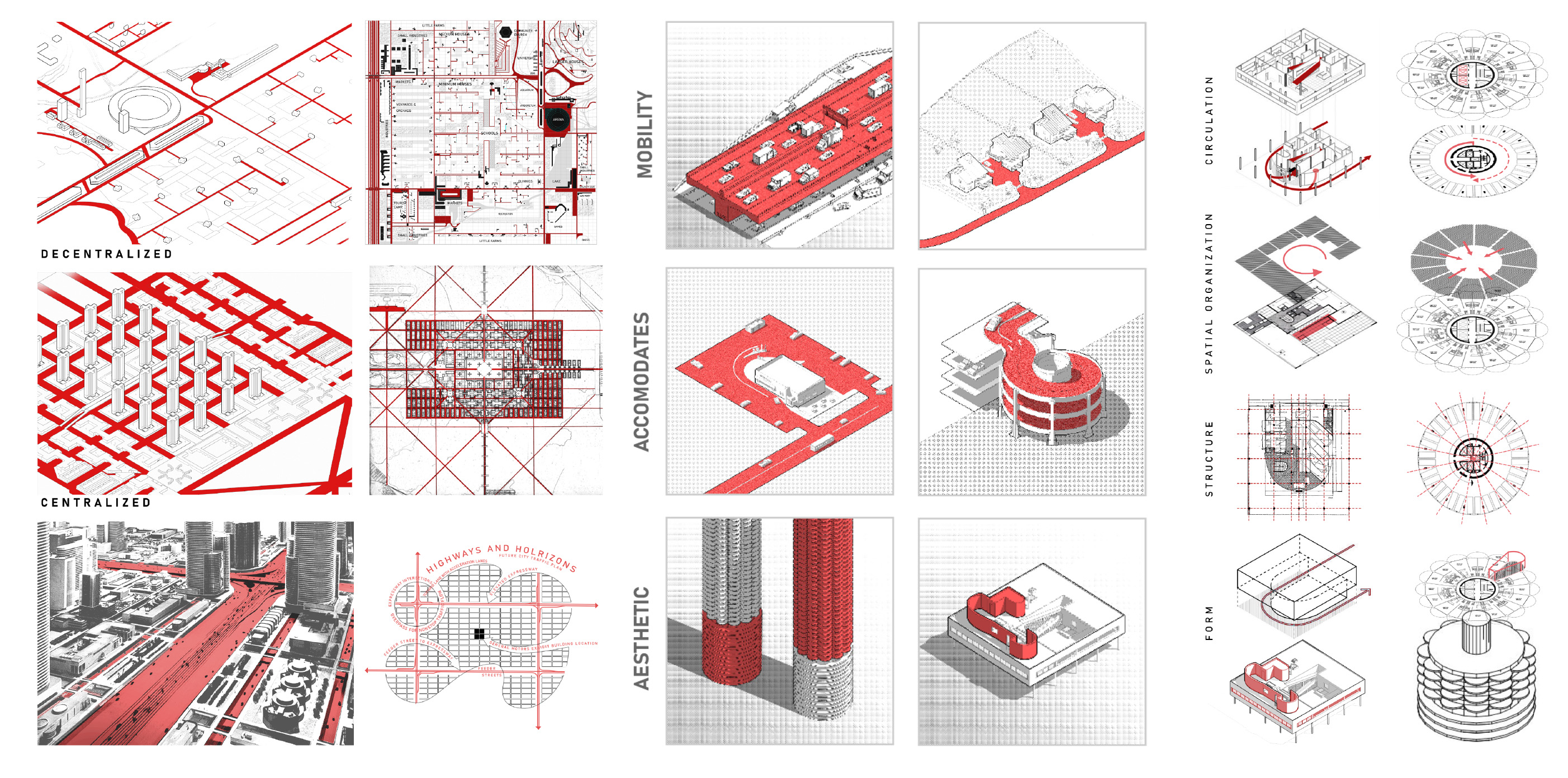
Same goes for the architectural level. Transport first impacts circulation—how people approach, enter, and move through a building. These considerations shape spatial organization, dictating the structural framework needed to accommodate the spaces. Ultimately, this process influences the building’s overall form, as architecture responds to the flow of transportation and the way people interact with it.


The site is located in the southernmost part of the current CBD area, where the surrounding land use is planned for a mix of functions, including residential, office, commercial, and real estate developments. The area’s unique combination of road corridors and a river presents significant potential for future growth. In this thesis, the city is projected to develop more high-rise buildings in the coming years, aligning with its urban expansion and densification trends.


The emerging verticality of the city, combined with the introduction of airborne VTOL transportation, will redefine how we design urban landscapes. The previously underutilized airspace surrounding buildings will no longer remain empty; instead, it will become an active and integrated part of the city’s mobility network. This shift challenges conventional urban planning, requiring new architectural strategies to accommodate three-dimensional movement and connectivity.
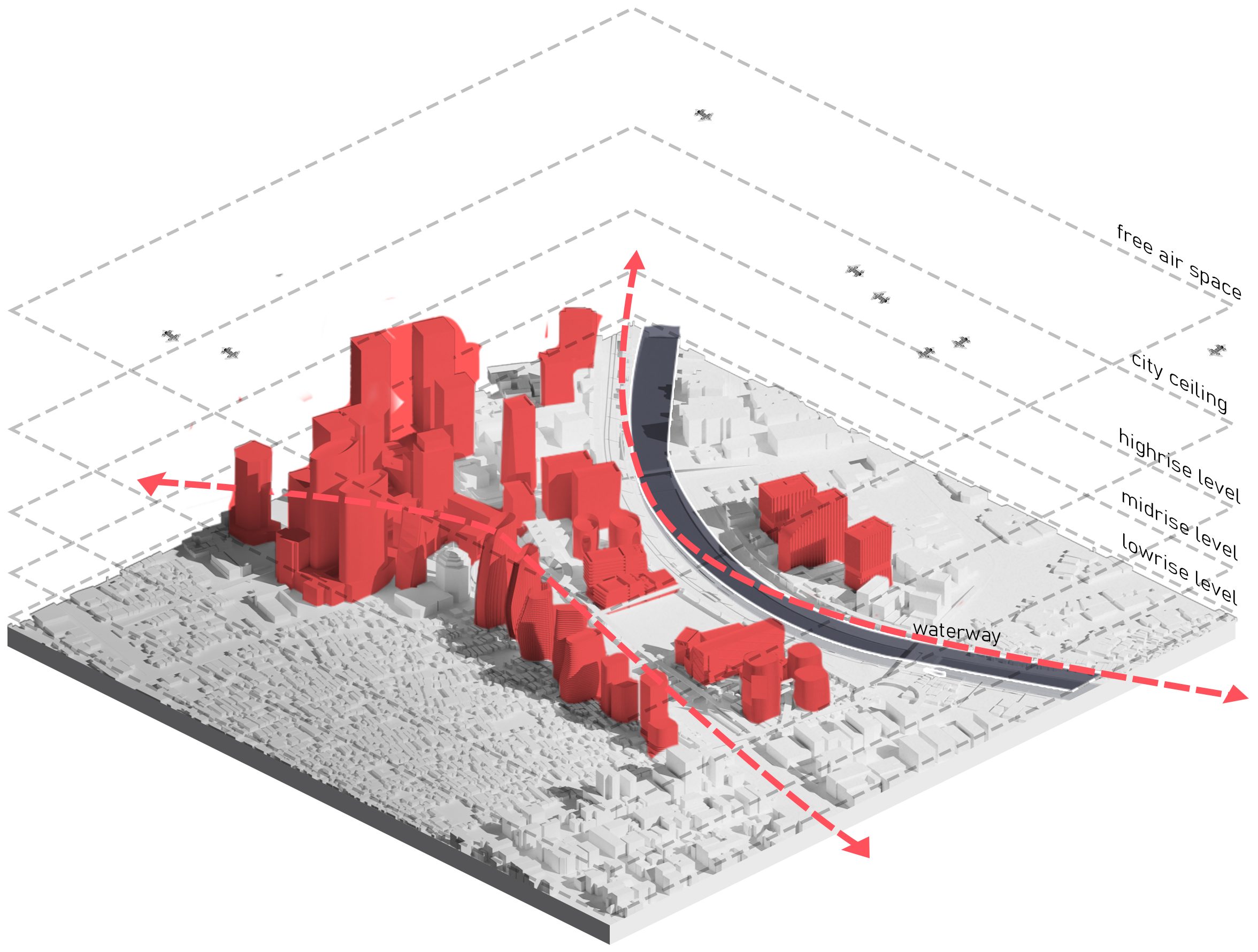
This will create a multilevel city, instead of planar city that is dominated by cars and motorcycles.
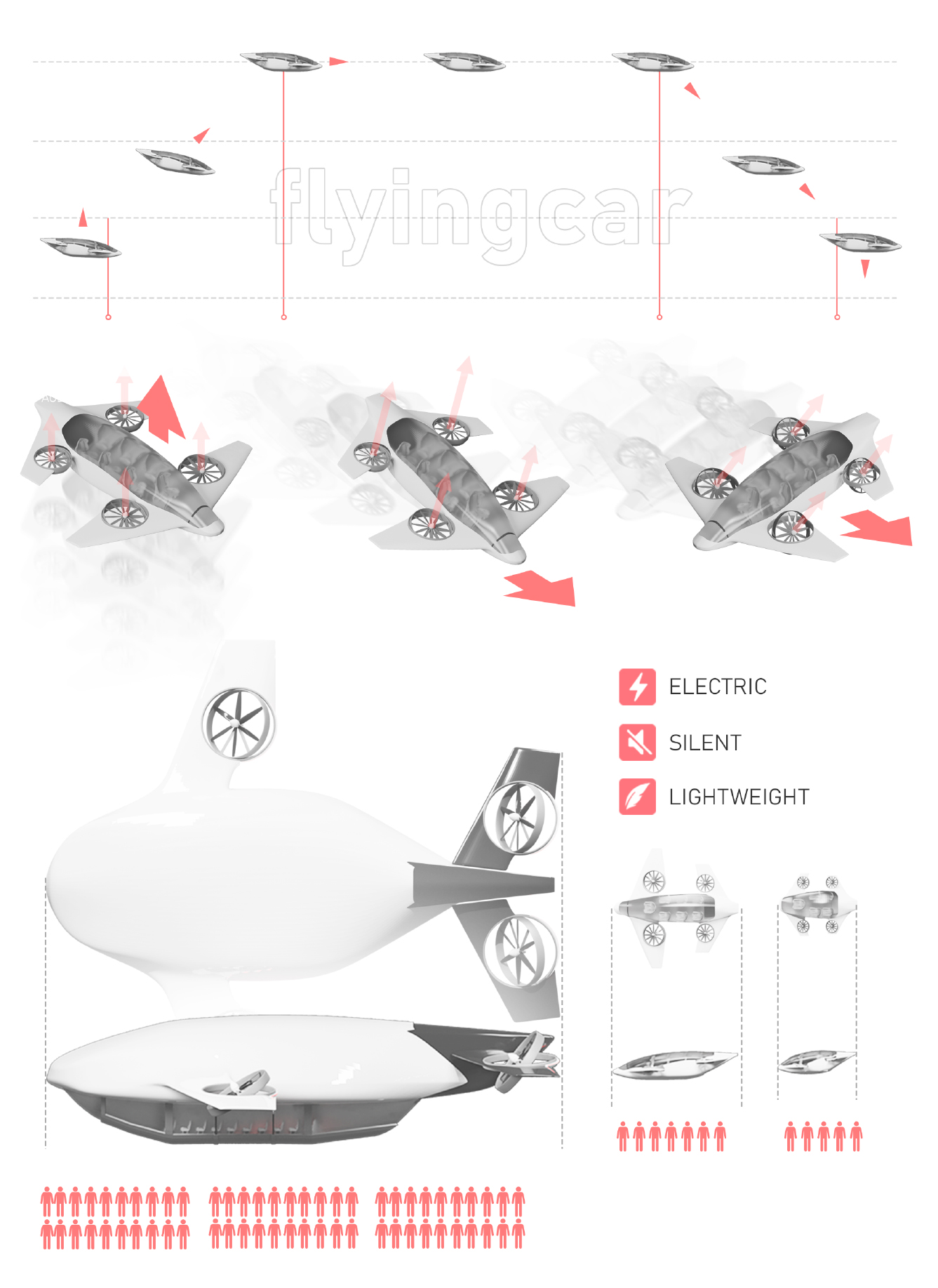
One of the most rapidly developing innovations is airborne vehicles, specifically electric Vertical Take-Off and Landing (e-VTOL). In this design, these vehicles are not directly adopted; instead, they are speculated into three classes of e-VTOL. The mobility of airborne vehicles in this context is assumed to operate in three-dimensional movement—ascending and descending, moving forward and backward, as well as sideways and rotating—similar to the mechanics of a helicopter. The flight process begins with hovering, then transitions into a climbing position, before reaching cruising altitude.
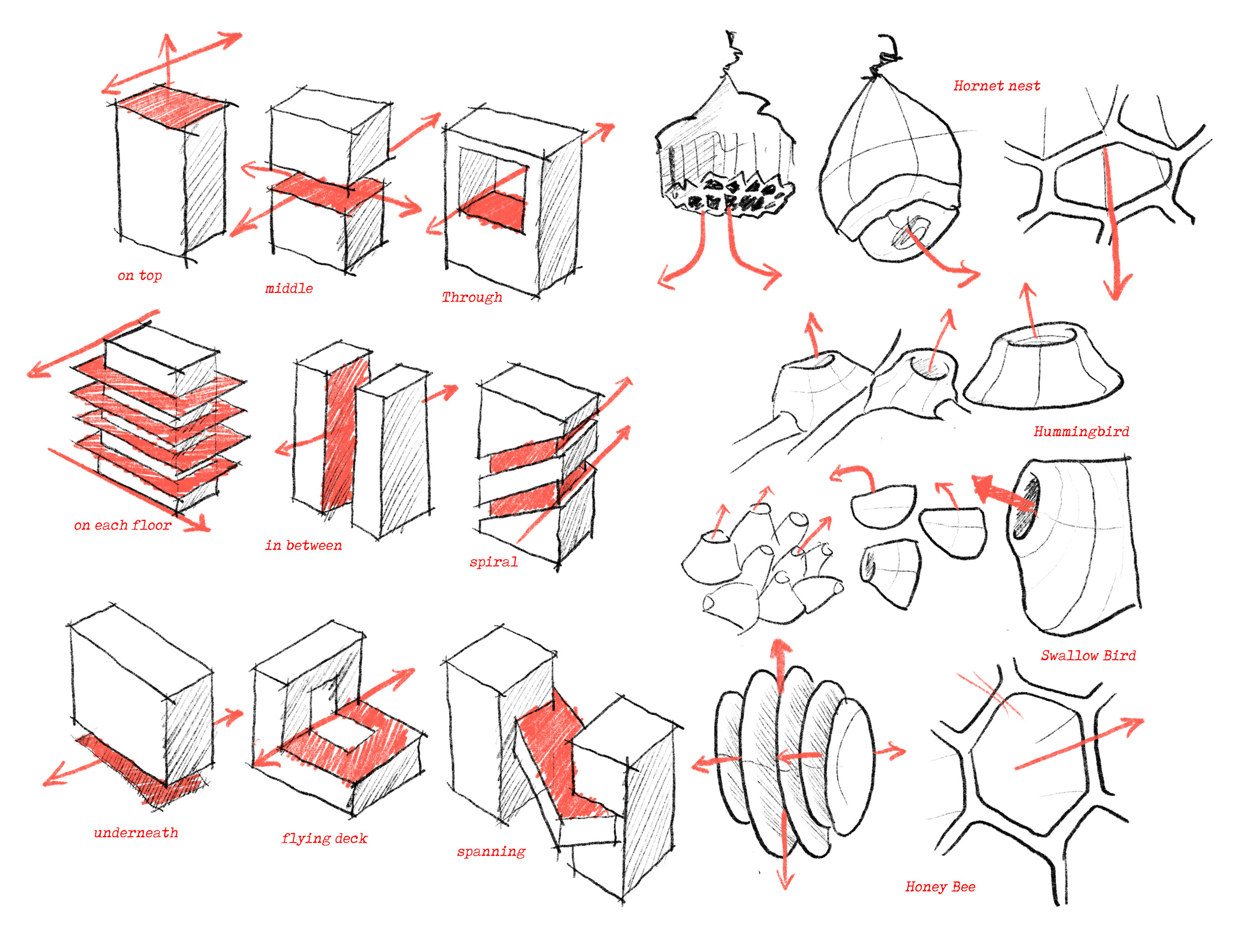
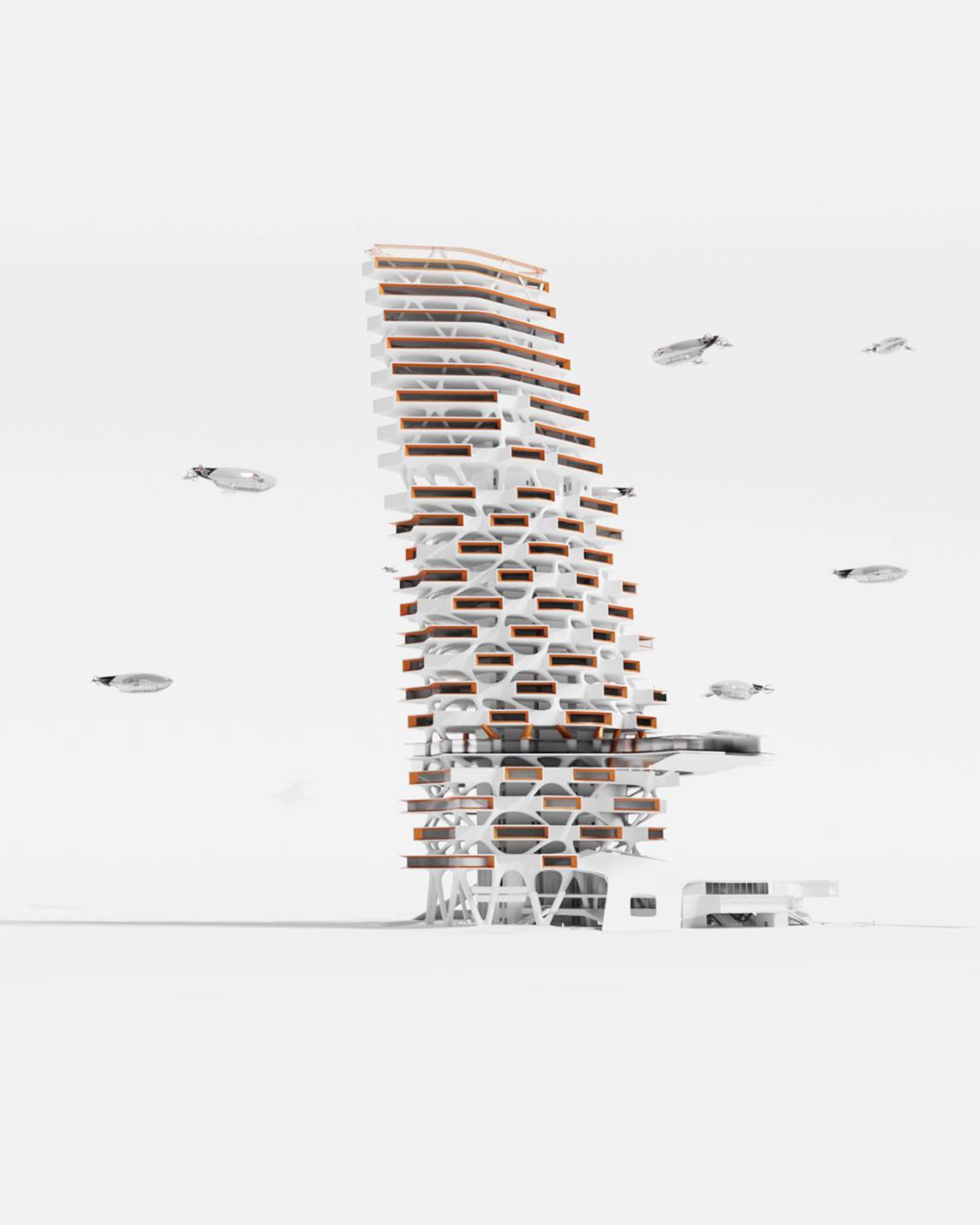
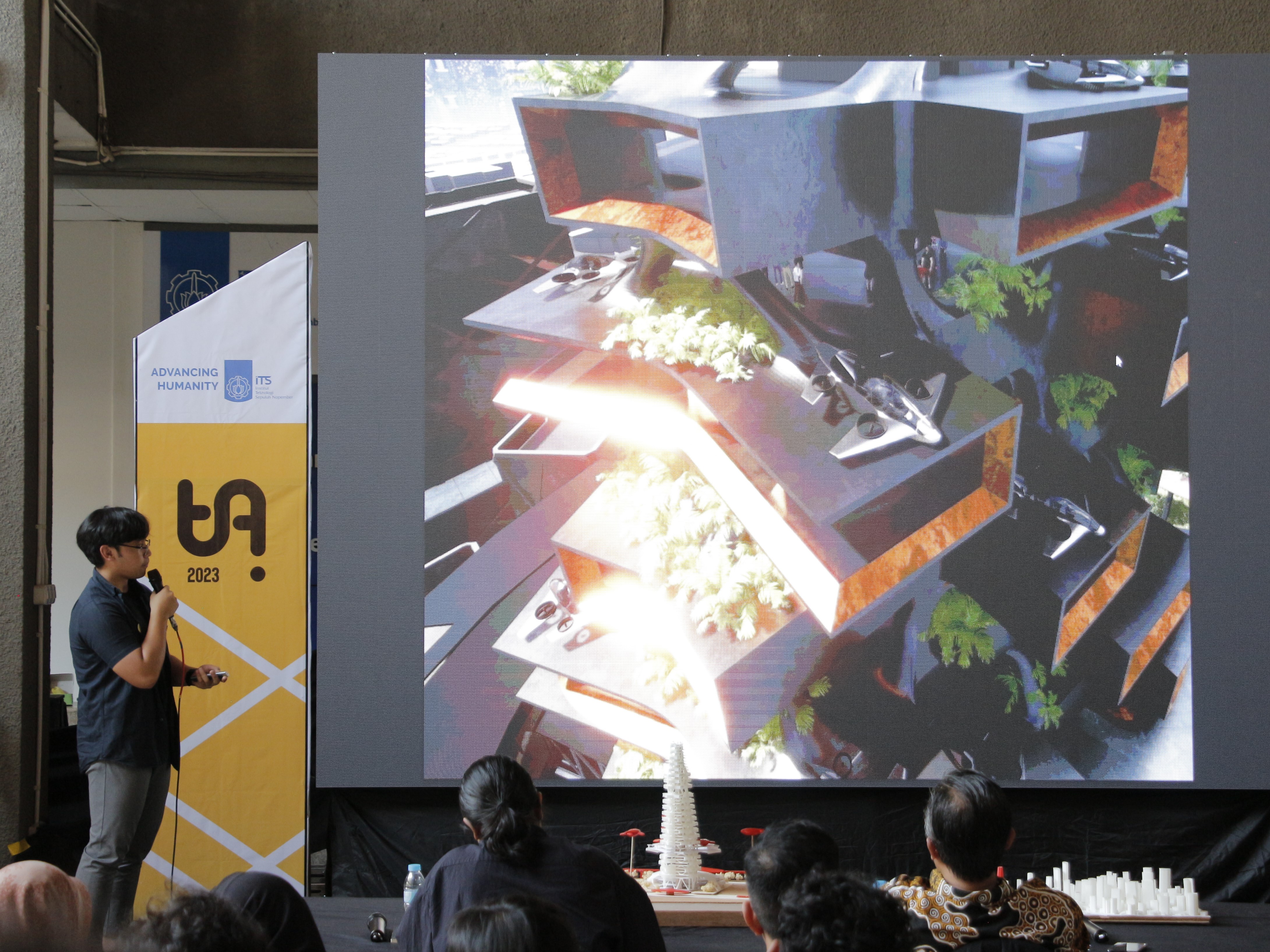
As inspiration, the design adopts forms from the dwellings of creatures with similar movement patterns, such as wasps, honeybees, swallows, and hummingbirds. The way these animals interact with their nests influences the massing exploration of the building. Concepts include landing pads on rooftops, penetration openings for access like beehives, decks attached to the core like swallow nests, and decks spanning between structures like hummingbird nests.
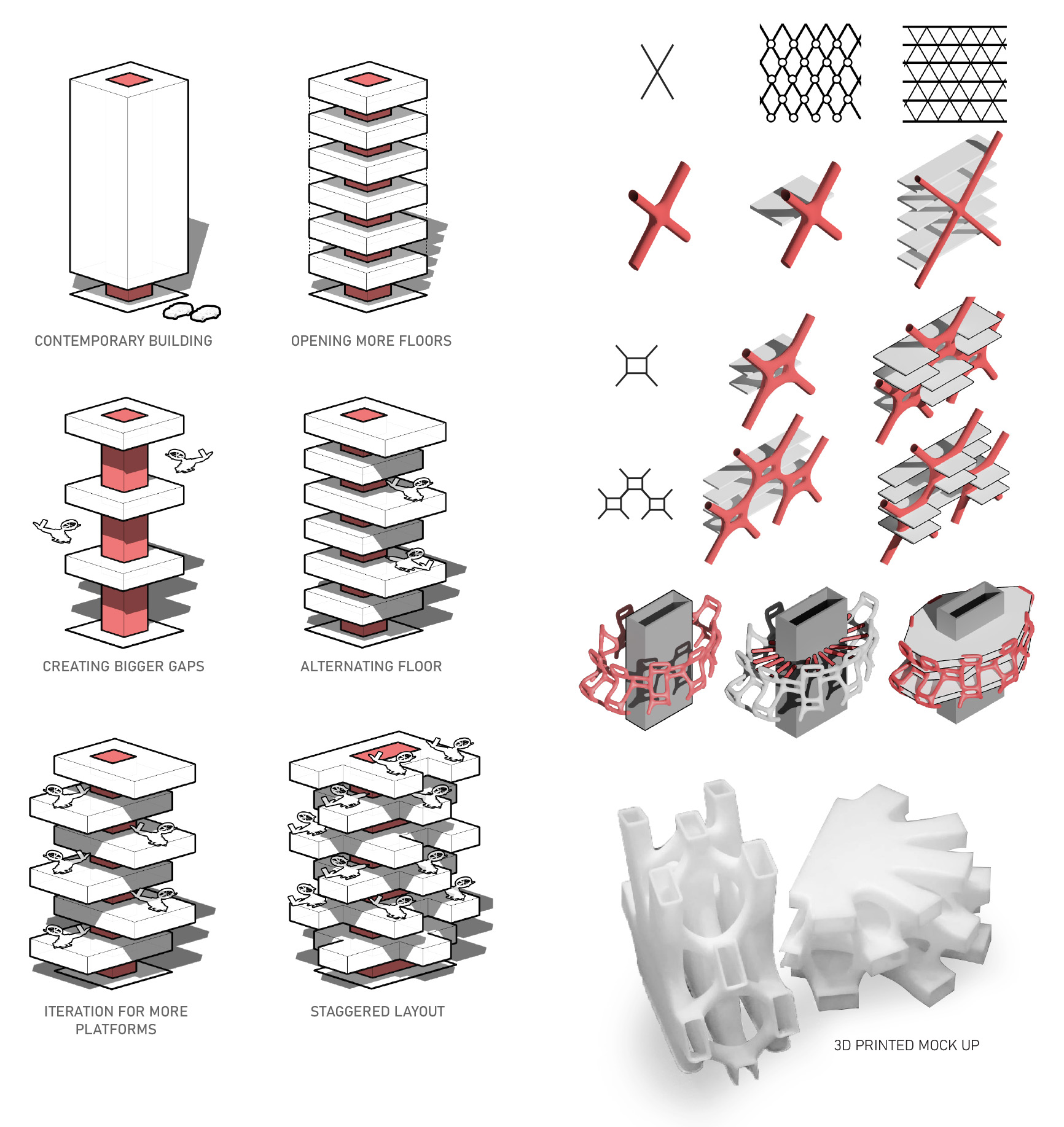
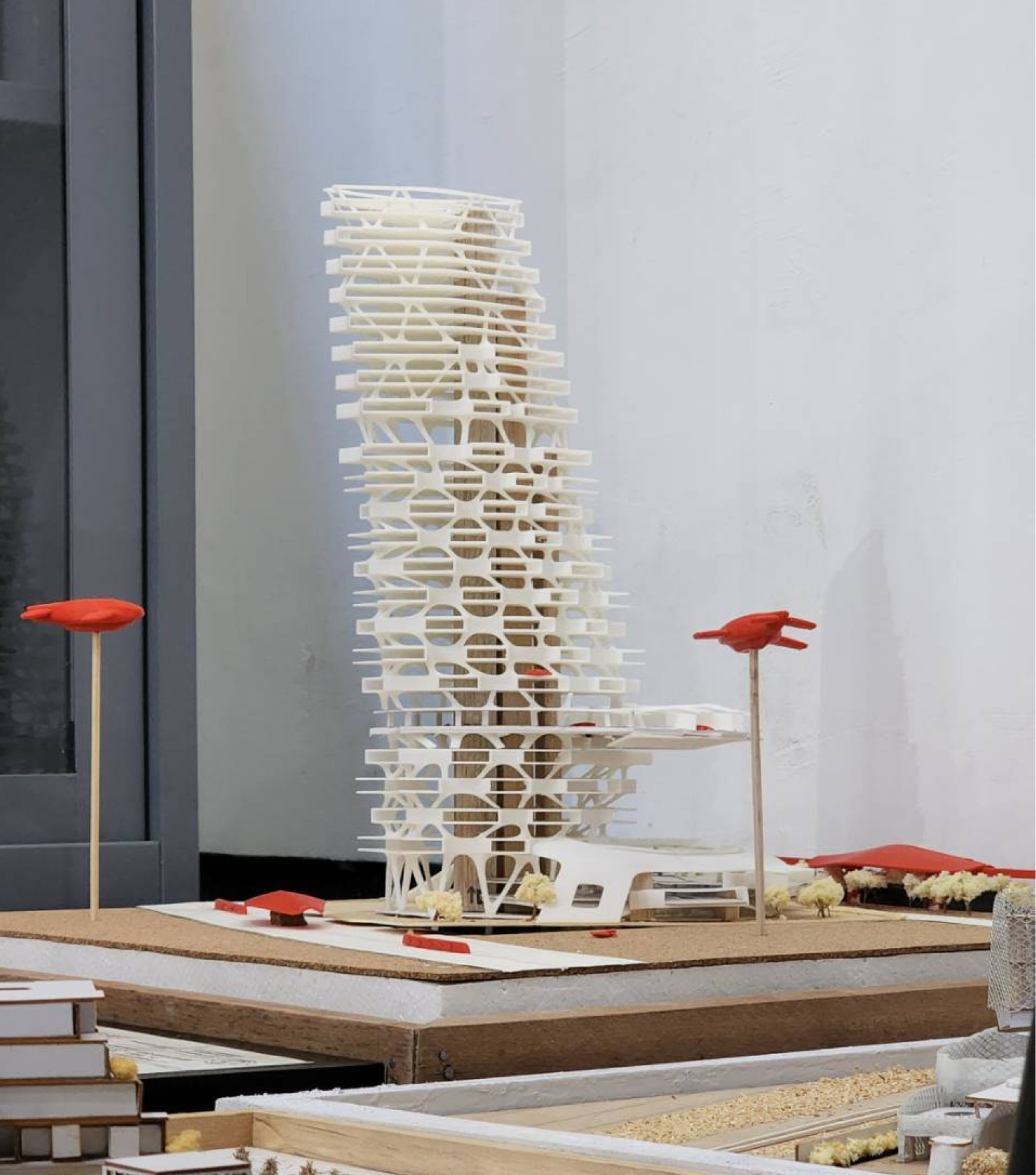
The spatial organization exploration starts with a conventional skyscraper form. To introduce access to outdoor spaces, alternating floors are opened up. These gaps are then expanded to create larger vertical spaces. The open floors are extended outward in a staggered manner, and the structure is further refined to maximize platform layout efficiency.

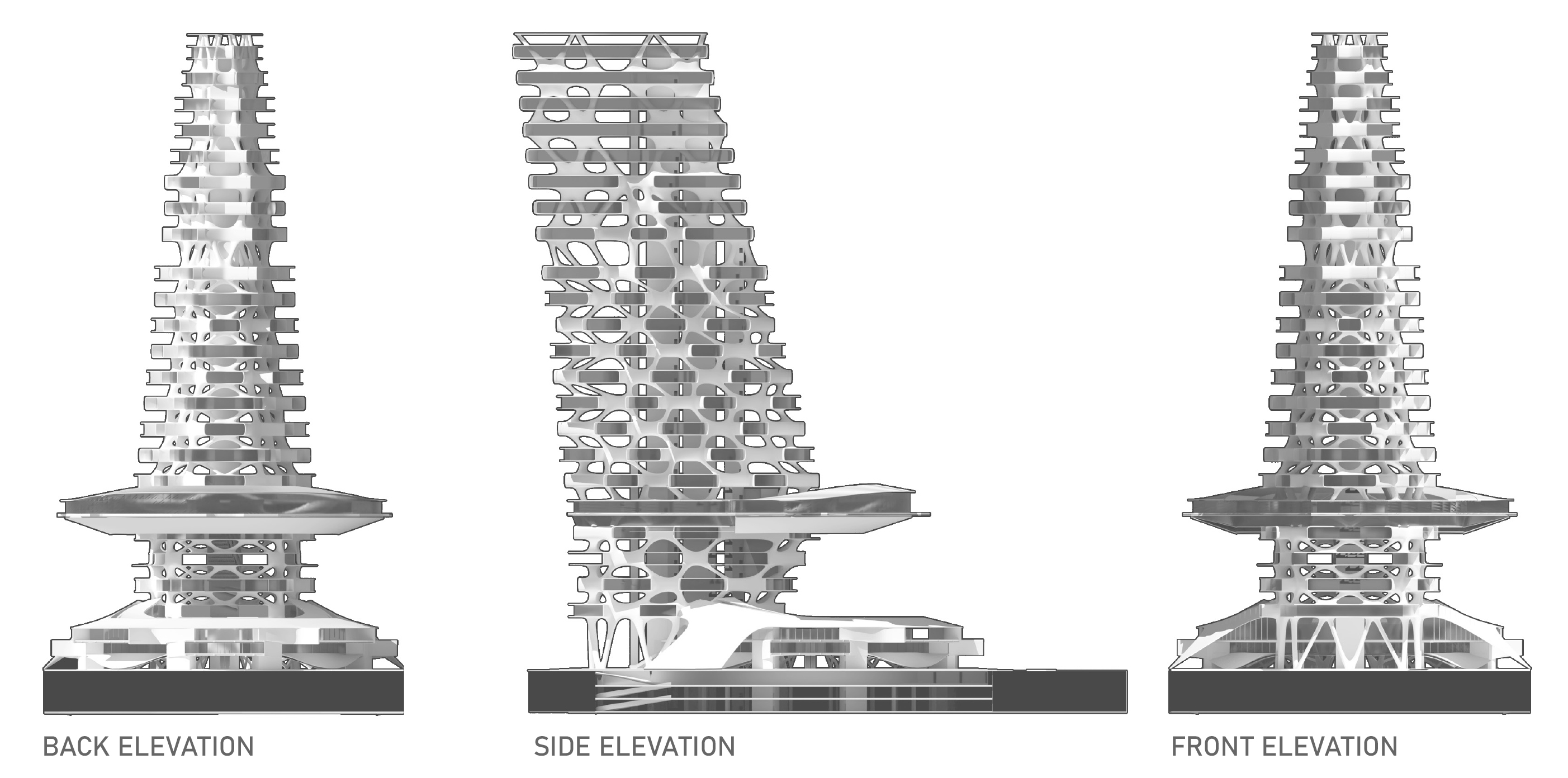
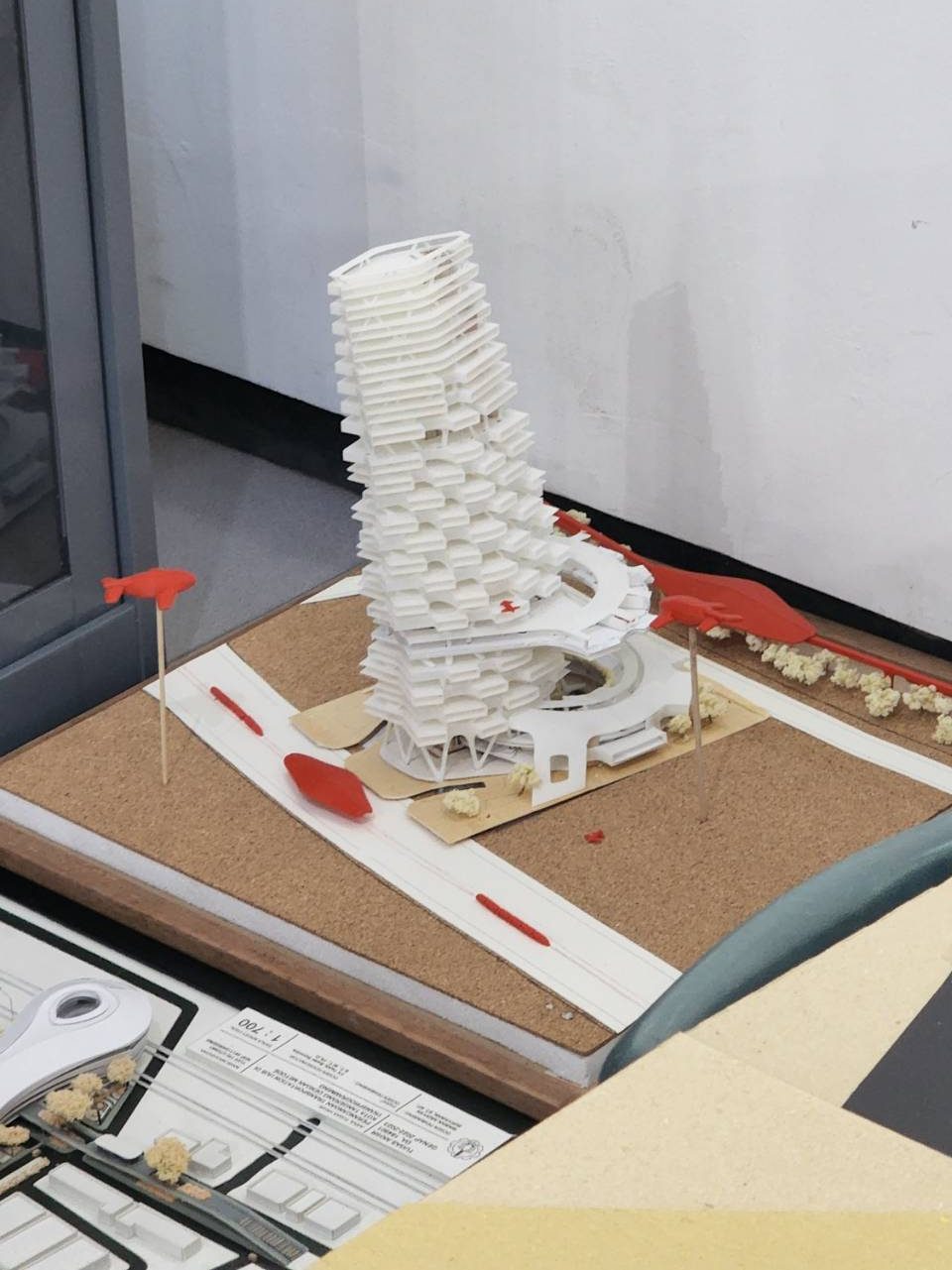
The building mass transitions from a circular base to a diamond shape, optimizing the flight radius for airborne vehicles operating on the decks. As the floors ascend, they gradually decrease in size to reduce structural load. The building leans forward to maximize air clearance above the cantilevered skyport, while the core remains upright to anchor the structure. An octagonal structural pattern adapts to this tilt, creating an organic form reminiscent of a beehive.
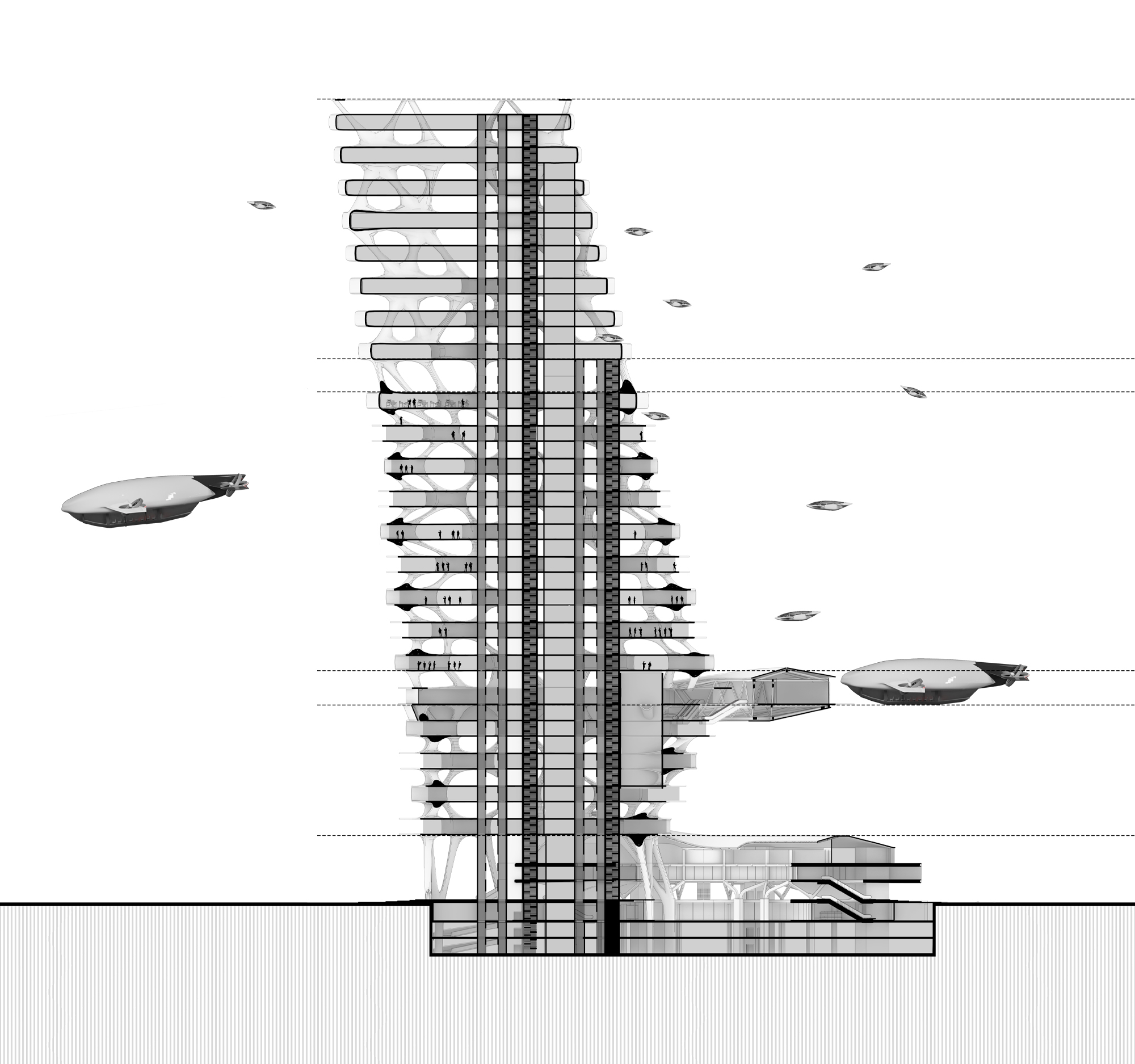
The building accommodates three types of airborne vehicle interactions. The semicircular cantilevered structure serves Type I and II vehicles, while Type III vehicles dock at vertical extensions. Type I vehicles hover during passenger boarding, whereas Type II land on the cantilevered platform, which features six departure gates and two service/parking entrances. Type III vehicles operate from designated deck extensions with rapid turnover, minimizing long-term parking needs.
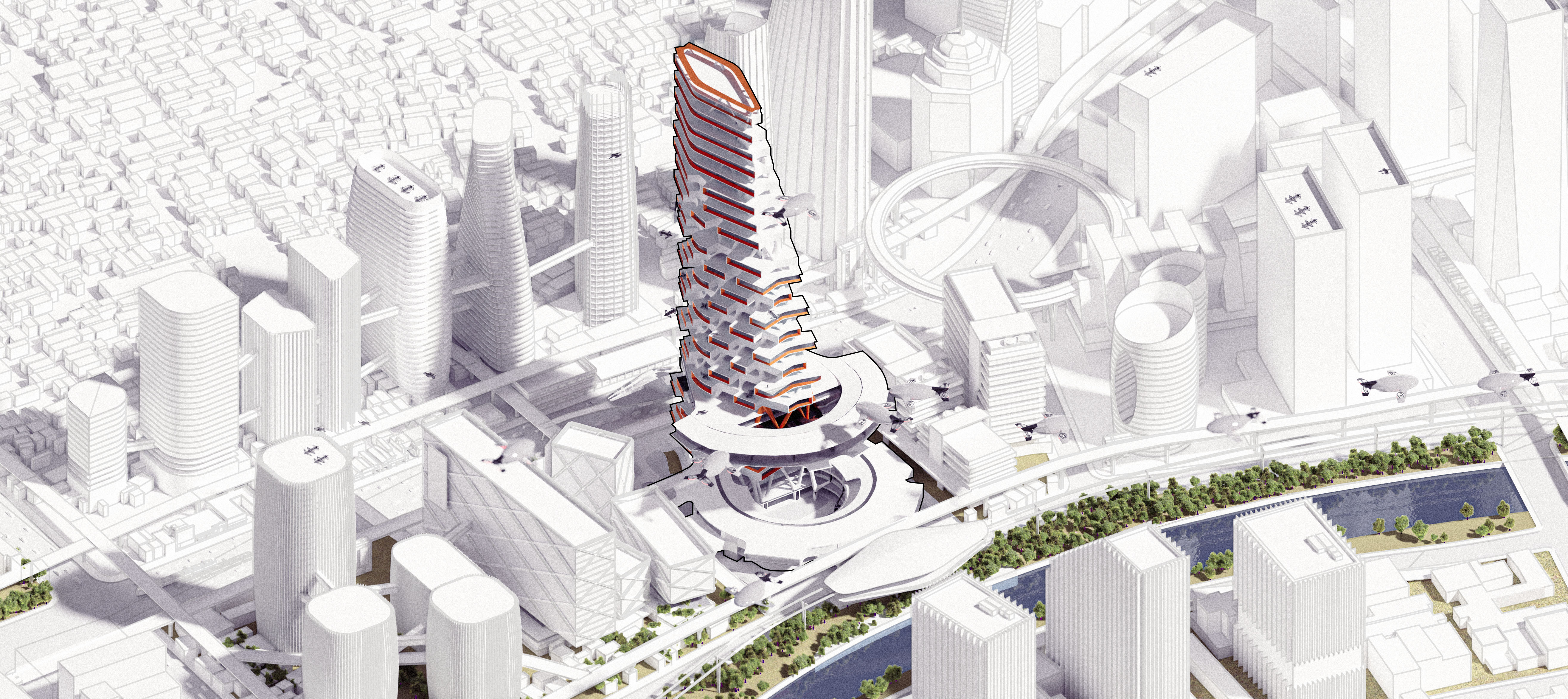
In this speculative scenario, integrating airborne vehicles into buildings affects circulation, spatial arrangement, structural systems, and overall form. The movement characteristics of airborne transport add a new dimension to high-rise buildings. Spatial organization is redefined, breaking free from conventional entry points. The final design presents an innovative and creative response to technological advancements in transportation, envisioning architecture that adapts to the urban context of the future.




2 responses
-
Hey this is an amazing project ,I am also doing my thesis project in urban air mobility,vertiport design
I am inquiring if I can refer to some of your case study on this topicLikeLike
-
Yes of course, i used several case studies, you can dm me on insta for discussing, sorry for the late reply
LikeLike
-


Desc
Keputran Hub is a thesis project envisioning Surabaya in 2080, focusing on the dynamic relationship between architecture and transportation. It explores how urban mobility, especially through e-VTOL vehicles, influences the design and function of high-rise buildings. The project promotes a multilevel city, integrating airspace into the urban landscape’s evolution.
People

 adyutafarrel
What do you think?