

At the Venice Studio 2025, held in Venice, I had the opportunity to join the MVRDV team led by Lorenzo Mattozzi and Cosimo Scotucci. The MVRDV theme focused on the adaptive reuse of a small island in the Venetian lagoon — Lazzaretto Vecchio. Originally built as a monastery, Lazzaretto Vecchio has undergone several transformations over time — from a quarantine facility to a military hospital, and later a dog asylum — before falling largely into abandonment. The site is organized in a linear, orthogonal layout with enclosed courtyards and modest ceiling heights of 3–4 meters. While some structures remain well-preserved, others show significant decay, with missing roofs and eroded walls.
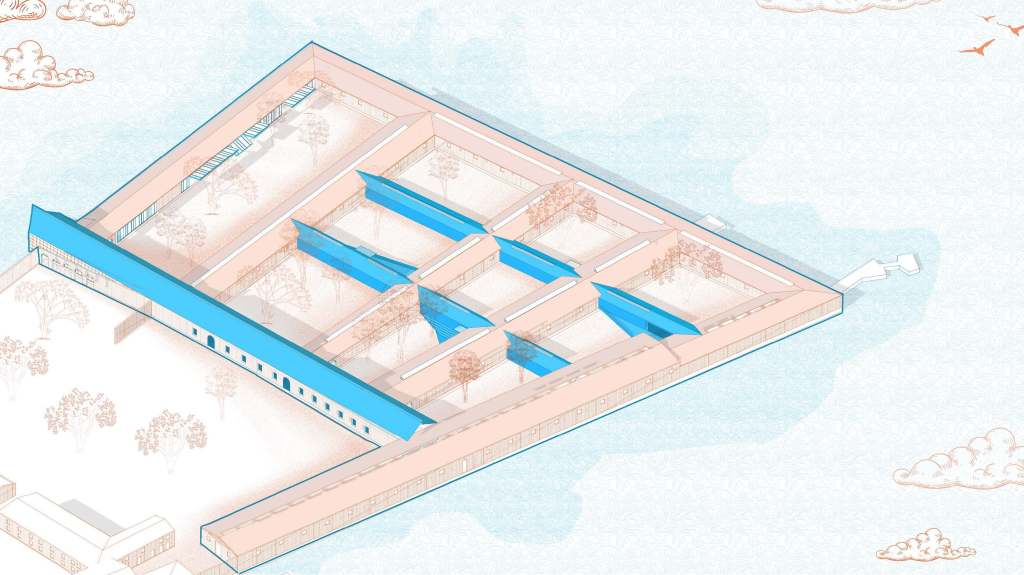
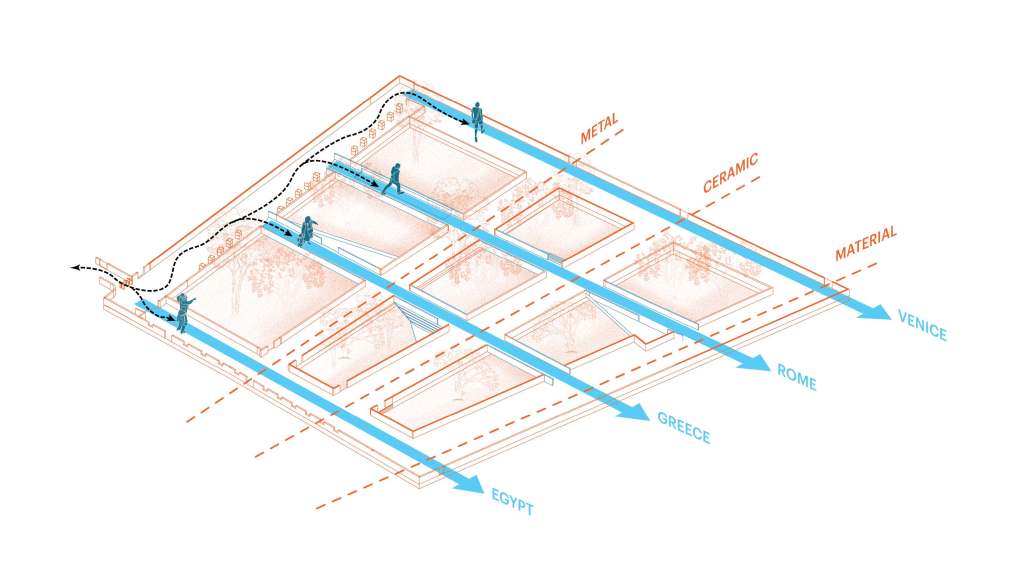
I was part of Group Museo (Museum) within the MVRDV team, together with Matilde Rasella, Mariia Tkachuk, and Parth Solanki. Our task was to repurpose the existing buildings on Lazzaretto Vecchio as the new Venice National Museum, which is currently located in Piazza San Marco. The existing collection consists of Egyptian, Greek, Roman, and Venetian artifacts. Instead of displaying them chronologically or geographically, we curated the exhibition through materiality — ceramics, metals, and stone — to create a tactile and sensory experience that emphasizes the human connection with matter and craft.
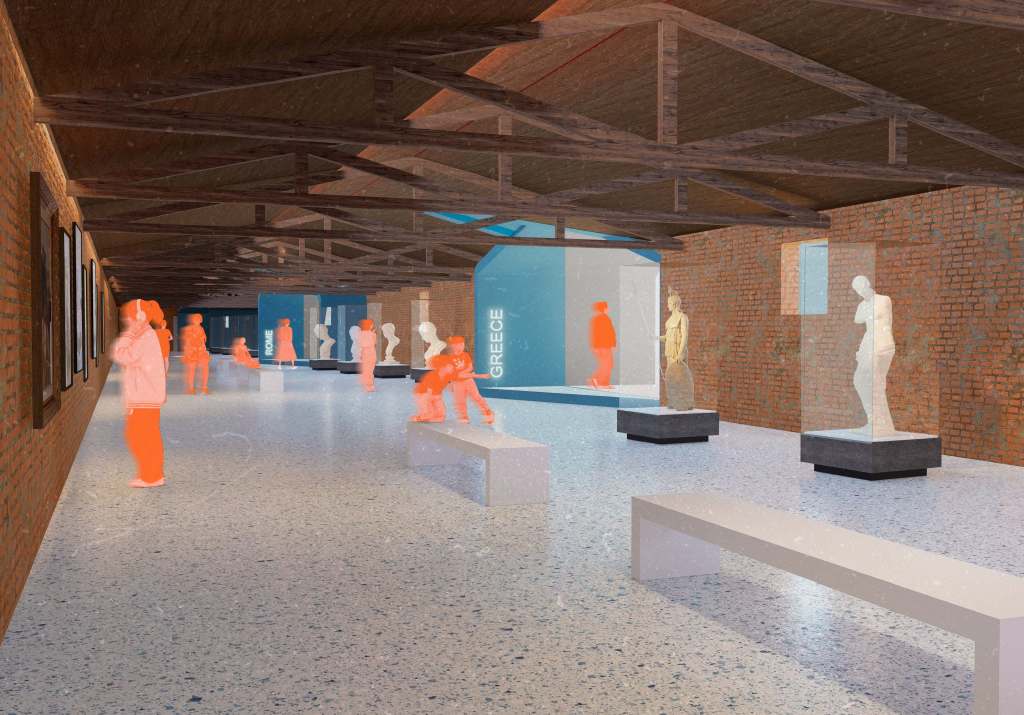
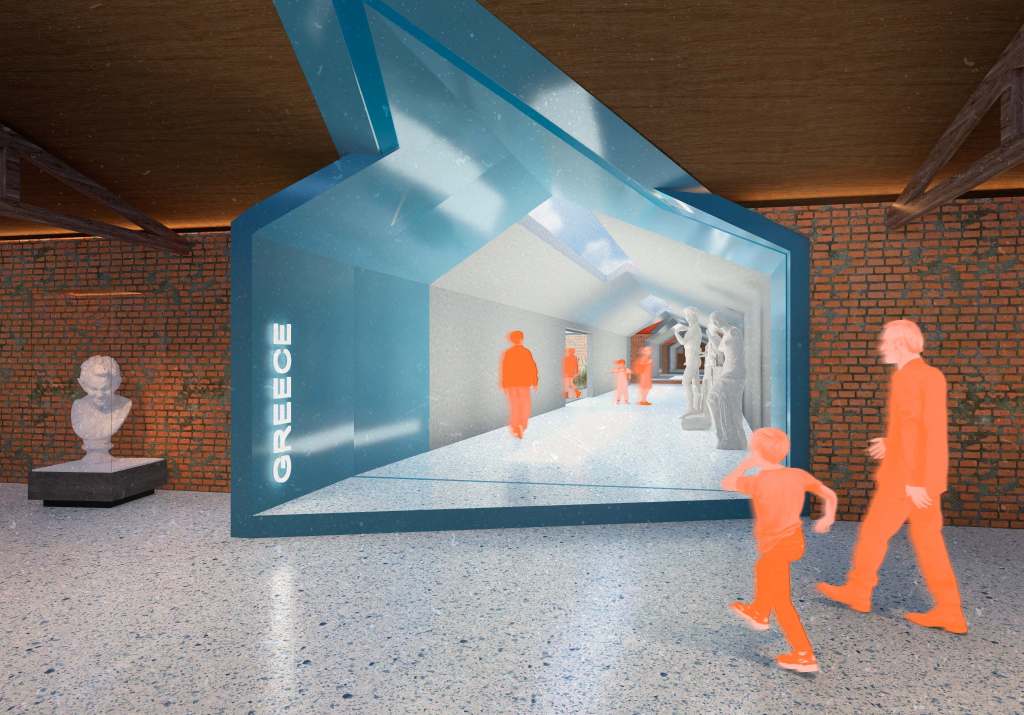
Upon entering the museum, visitors are guided into an exploration hall where they can navigate the galleries based on material or cultural origin. The spatial layout encourages freedom of movement — allowing people to read the story of the museum in their own way. Since the existing buildings already follow a grid-like structure, we introduced a new intersecting axis to form a matrix of hallways housing the collections.We adopted the color blue, inspired by the history of Lazzaretto Vecchio and the iconography of Mary of Nazareth, as a visual identity and contrast to the aged materiality of the existing structures.
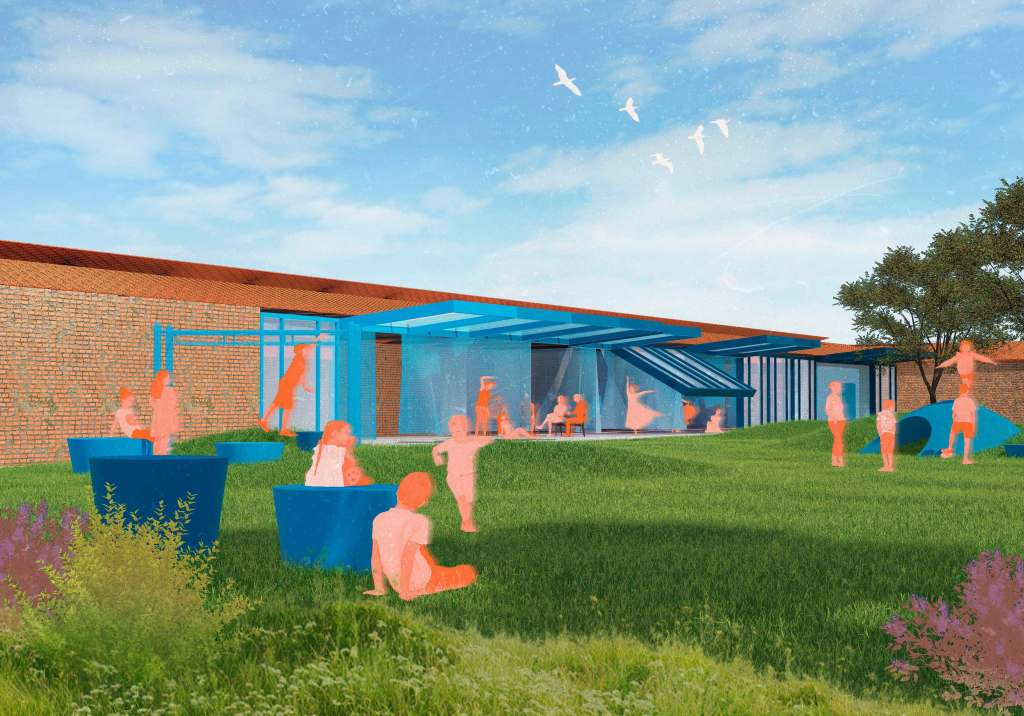

At the entrance, a civic and temporary exhibition space welcomes visitors. This space follows the same design principles but with greater flexibility. Instead of permanent partitions, curtains are used to define adaptable zones, creating a boundless interior that can transform according to different events. Large openings connect the civic space to the adjacent garden, allowing exhibitions and gatherings to extend outdoors. Through this concept, our proposal aims to revitalize Lazzaretto Vecchio, stimulate local economic activity, and distribute tourism more evenly across the Venetian lagoon, establishing the island as both a cultural and community landmark.
Desc
At the Venice Studio 2025, I collaborated with the MVRDV team to repurpose Lazzaretto Vecchio into the Venice National Museum. Our exhibition emphasized materiality over chronology, guiding visitors through galleries that enhance tactile experiences. We introduced a flexible civic space and utilized blue as a visual identity, aiming to revitalize the site and promote cultural…
People



 adyutafarrel
What do you think?